Service & agency businesses
10–200 staff
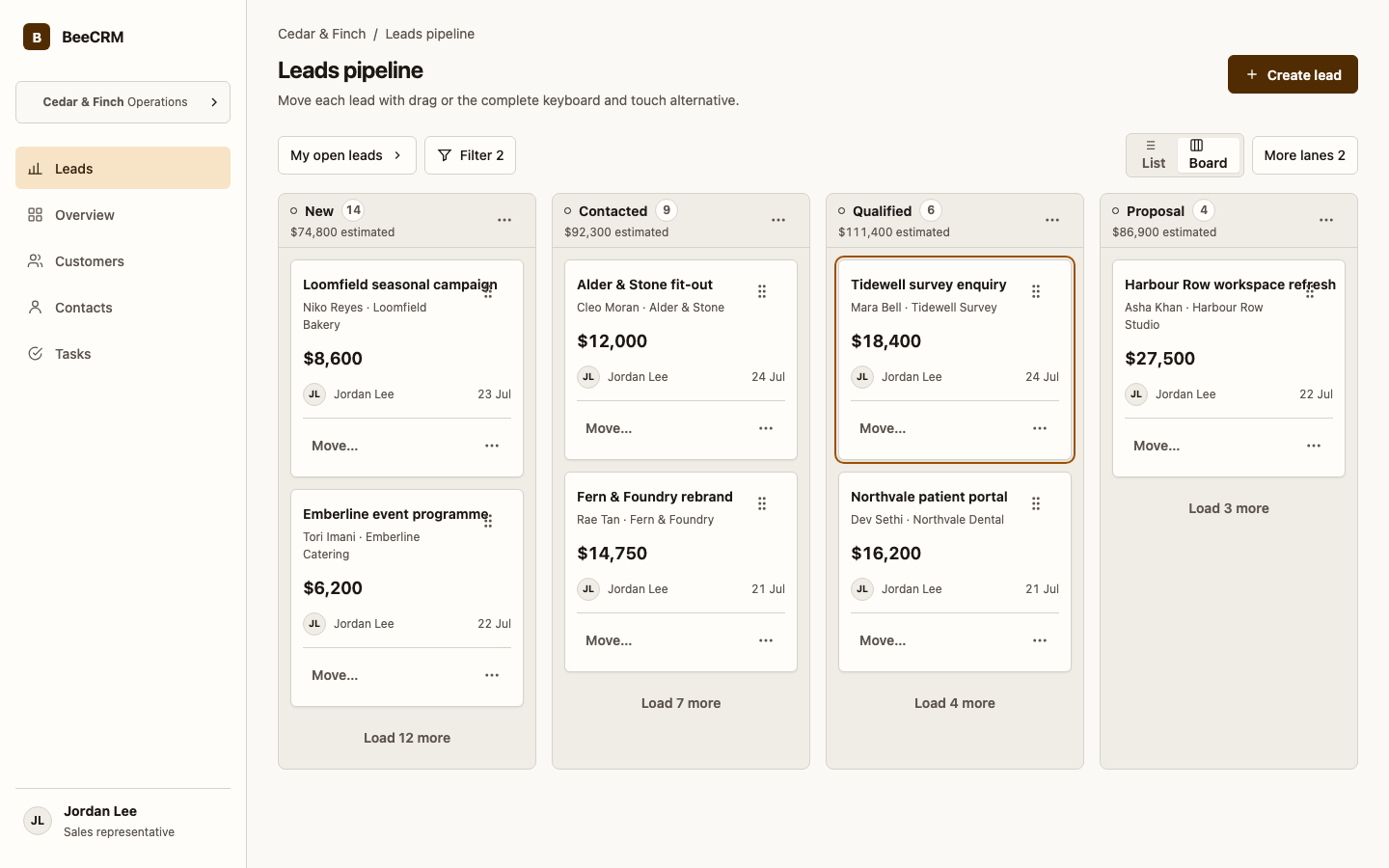
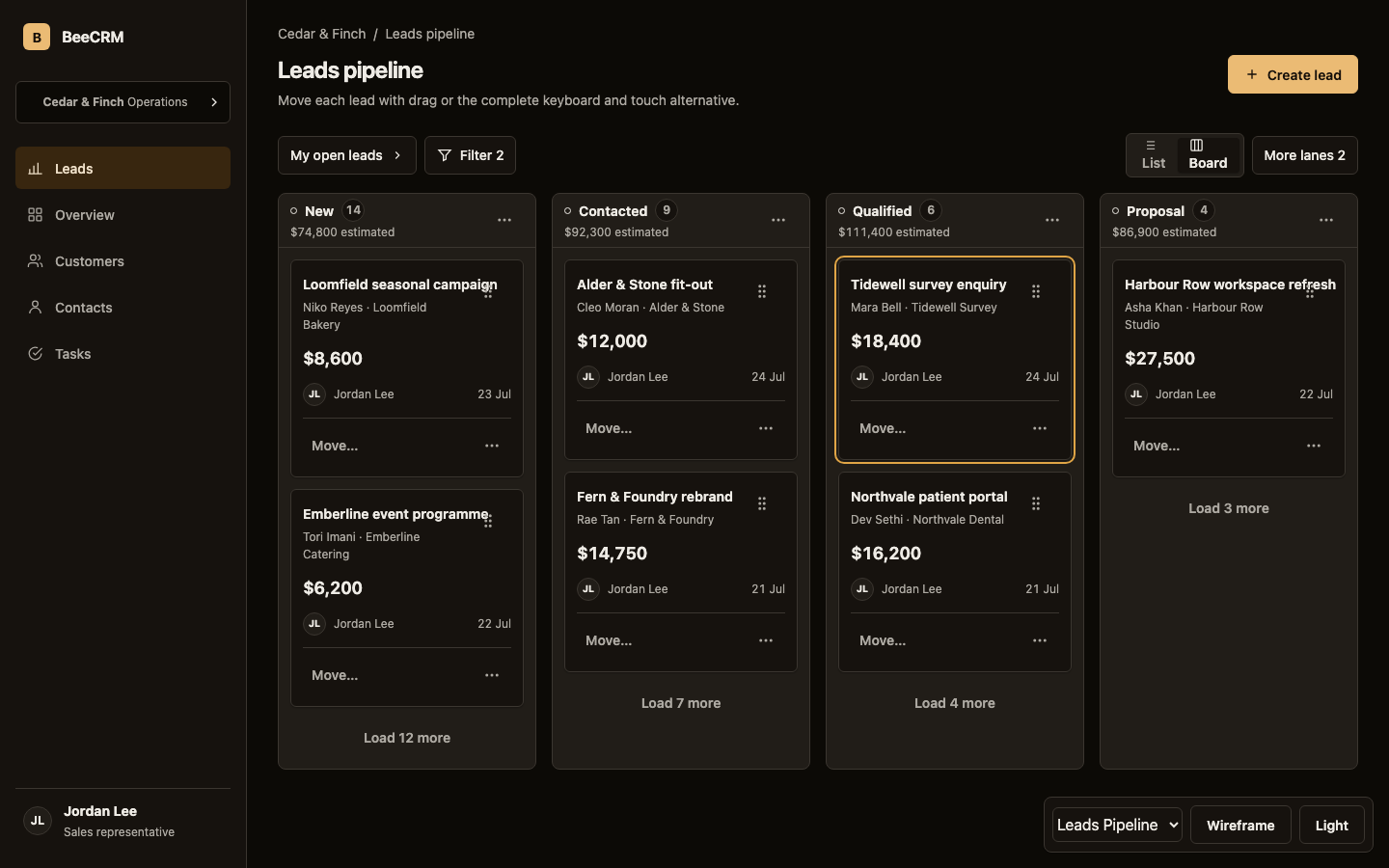
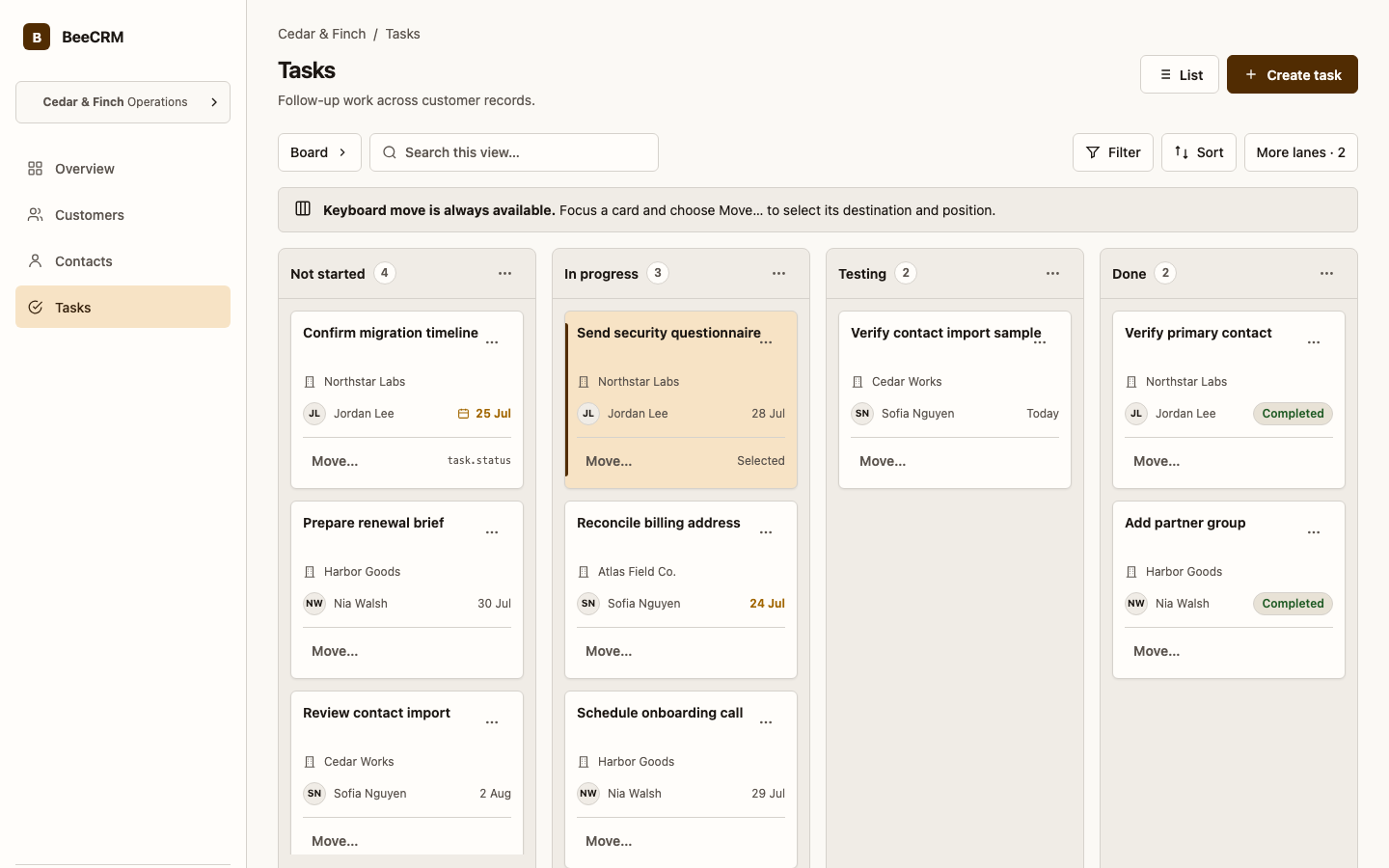
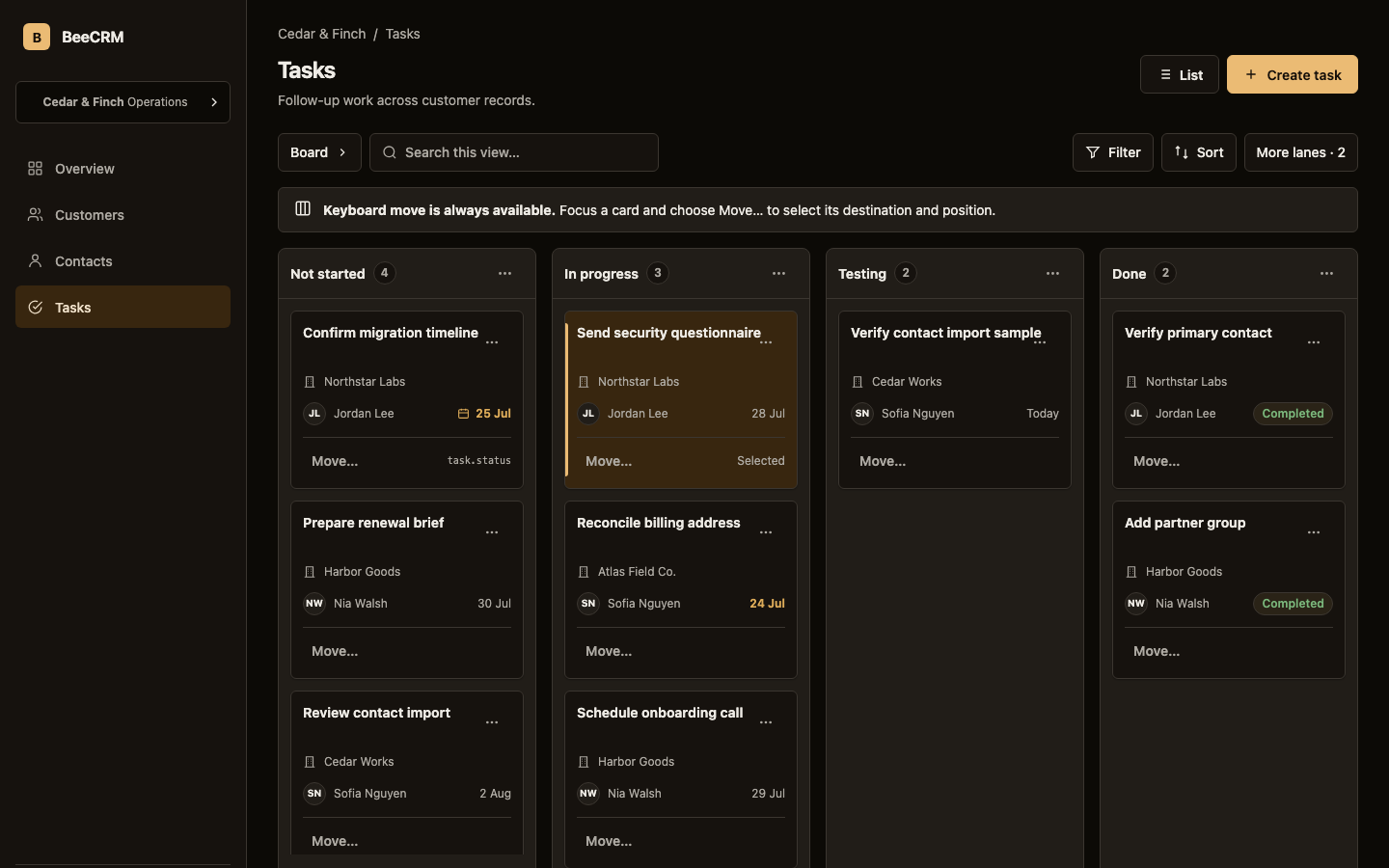
Replace fixed-schema tools with a CRM your own admins extend. Lead → customer → task loop, custom fields, kanban views — all configuration, no engineering project.
 BeeCRM
Phase 1 · in developmentEarly access — opening soon.
BeeCRM is a metadata-driven CRM platform. Fields, relations, views, permissions, and workflow are stored as data and interpreted by one shared runtime — so your own admins extend the system without an engineering project.
same permission boundary
In most CRMs, every new field, relation, or view is a small engineering project — a fixed schema, a consultant, a migration. BeeCRM makes those changes configuration, while one rendering and authorization model stays intact.
How it works
Object and field definitions enter one metadata engine. The same definitions shape the interface, enforce permissions, and expose equivalent operations over REST.
UI operations — including metadata and admin operations — have 100% UI-operation parity over REST. API tokens are attenuated sub-principals of a real user, so automation inherits the user's bounds instead of escaping them.
An agent never outranks its human.
POST /api/v1/objects/lead/fields
Authorization: Bearer <user-token>
Content-Type: application/json

{
  "key": "service_region",
  "label": "Service region",
  "type": "select",
  "required": false
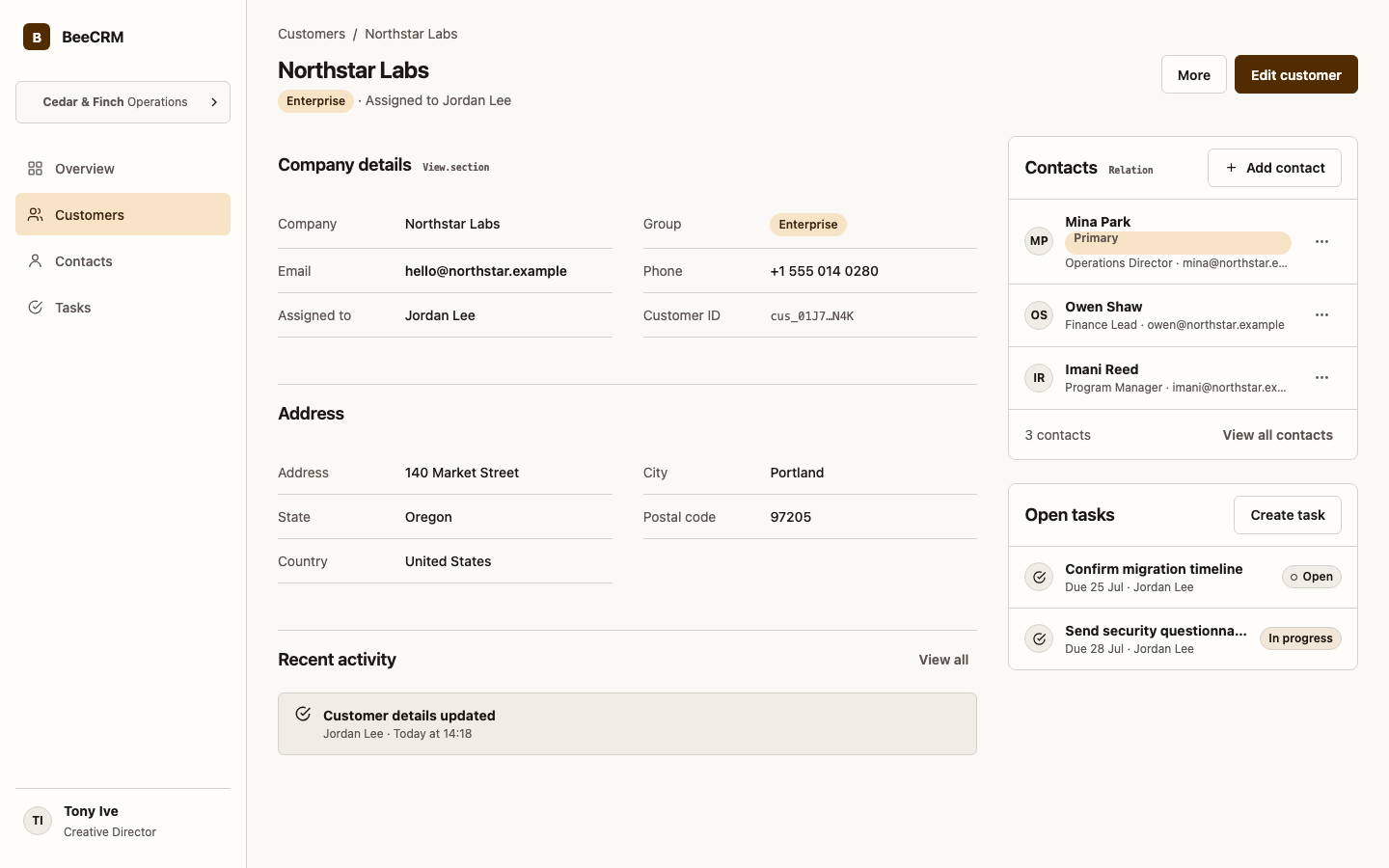
}Leads, customers, contacts, and tasks share custom fields, role × object permissions, audit, bulk operations, and metadata-defined views in the Phase 1 CRM spine.
10–200 staff
Replace fixed-schema tools with a CRM your own admins extend. Lead → customer → task loop, custom fields, kanban views — all configuration, no engineering project.
Governance from day one
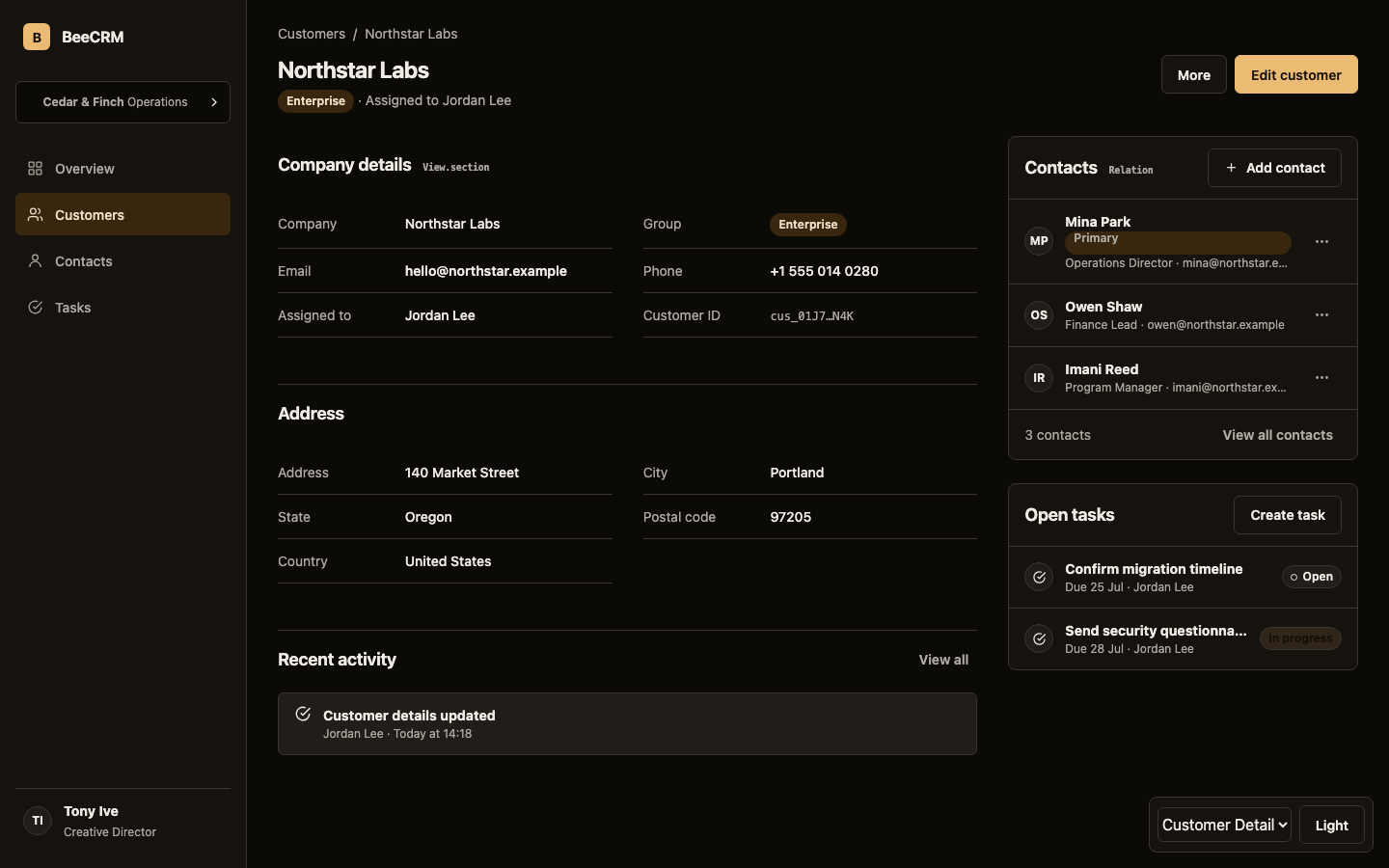
Role × object permissions, field-level modes, audit, team scopes. A metadata-driven core you can govern and extend without waiting on a vendor.
Full API parity
Every UI operation has a REST equivalent. Attenuated tokens mean an AI agent can drive the entire product — but never with more authority than the human it acts for.
Forward-looking targets
CRM establishes the shared runtime. Sales documents, engagement, and the bee
CLI follow next; projects and billing beyond. Planning windows, not promises — phases
exit on proof, not on dates.
bee CLI at 100% REST parity.Sprint-aligned planning targets on 2–3 week cadence. Targets are revisable; exit criteria are not. See full roadmap for milestone details.
TypeScript end-to-end. Hono + PostgreSQL on Cloudflare Workers, portable to a conventional Node server. Designed to remain operable by a small team.
BeeCRM is in active development. Leave one email address and we will only use it to contact you about early access.